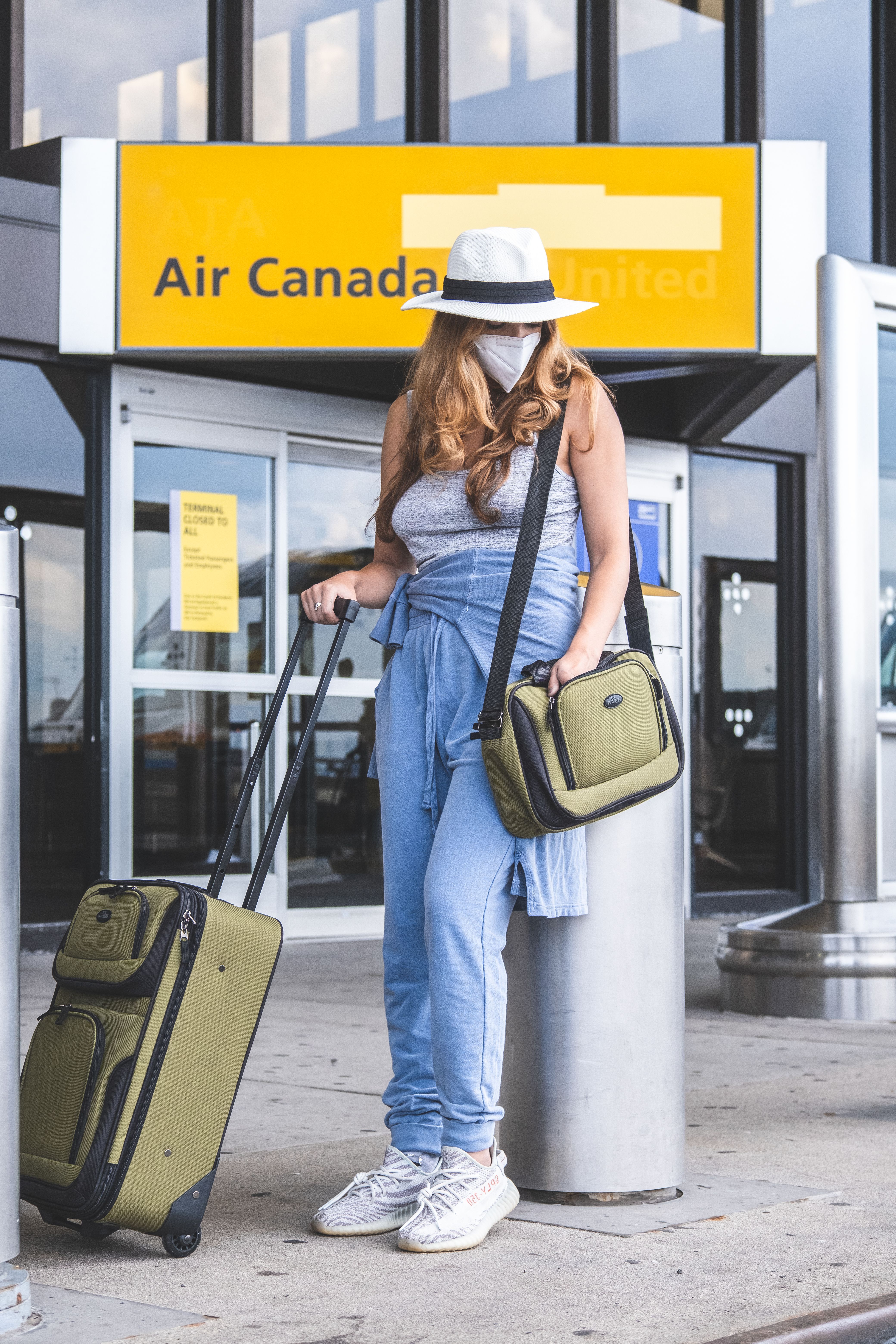

Photo by Malcolm Garret on Pexels. Taken in Canada.
Canada · Arrival documents · Last verified October 1, 2026
The documents you need to enter Canada depend on your immigration status, but the documents you will need to settle successfully after arrival go much further. Bring immigration papers in your hand luggage, plus civil-status, vaccination, education, employment and driving records that may be difficult to replace from abroad.
Do not put these in checked luggage
- Your valid passport or travel document.
- Your immigration approval/entry documents for your status — for example COPR and immigrant visa for a permanent resident, or the required work/study approval documents for a temporary resident.
- Proof of funds if your immigration program requires it.
- Important customs/goods lists if you are settling permanently and bringing goods now or later.
- Any documents a border officer may need to verify your admission.
IRCC explicitly tells newcomers to keep essential entry documents with them rather than packing them in luggage.
1. Immigration documents: bring the set for your status
There is no single document pack for every newcomer. Permanent residents, work-permit holders, students and family members can need different documents at the border.
For permanent-residence arrivals, IRCC lists a valid passport/travel document, Confirmation of Permanent Residence (COPR) for each family member and an immigrant visa if applicable among the essential documents. Keep them accessible throughout the journey.
For people entering to work, IRCC’s work-permit arrival guidance says approved applicants may need their passport, visa/eTA as applicable, port-of-entry letter of introduction and supporting documents showing they still meet the job/permit requirements.
Use the approval letter/checklist for your own immigration category instead of assuming a permanent-resident document list applies to a temporary worker or student.
2. Civil-status documents
IRCC recommends bringing civil records that may later be needed to prove identity and family relationships. Useful originals can include:
- birth certificates;
- marriage certificate;
- divorce or separation documents;
- death certificate for a deceased spouse where relevant;
- adoption records;
- legal name-change documents.
These can become relevant for benefits, school registration, immigration applications and other services long after the airport arrival is finished.
3. Vaccination and medical records
IRCC specifically recommends bringing official vaccination records for you and your family. Children may need immunization records for school enrolment.
Also bring useful medical records that would be difficult to reconstruct later: current prescriptions, medication lists, important test results, specialist summaries, allergies and relevant dental records. These are not all border-entry requirements, but they can make continuity of care much easier.
4. Education records
Bring school records, diplomas, degrees, transcripts and professional training certificates for each family member where relevant. IRCC includes school records and education qualifications in its recommended newcomer document list.
If your occupation is regulated, also bring professional licences, certificates and any detailed syllabus or employment evidence that could help with credential recognition. An immigration Educational Credential Assessment (ECA), when your program required one, does not automatically replace every licensing document a provincial regulator may later request.
5. Employment records
IRCC recommends letters of reference from former employers and information about your education, qualifications and work experience for your résumé. For some immigration or employment processes, detailed employer reference letters, contracts, pay records or professional licences can also be useful.
Try to collect these before leaving your former country. Getting an old employer to create a detailed signed reference years later can be much harder.
6. Driving licence and insurance history
IRCC’s newcomer checklist includes your driving licence, an International Driving Permit where relevant, and a reference from your auto-insurance company.
Provincial licensing rules differ, and some provinces may care about proof of previous driving experience. Bring the original foreign licence and obtain official driving/insurance history before departure if your issuing authority or insurer provides it.
7. Goods accompanying you and goods arriving later
Permanent-residence settlers may need two copies of detailed lists showing goods they are bringing with them and goods that will arrive later, including values and identifying information. IRCC points newcomers to the BSF186 personal-effects accounting process.
Prepare this before travel if it applies to you. Reconstructing a detailed household inventory at the border is much harder than doing it at home.
8. If you are carrying more than C$10,000
Canada requires travellers to declare monetary instruments valued at more than C$10,000 when entering. IRCC’s settlement guidance specifically warns newcomers to make this declaration. The rule is about declaration; carrying more than C$10,000 is not automatically prohibited.
Translate important documents before you move
IRCC recommends having important newcomer documents translated into English or French before arrival so Canadian organisations can understand them.
For a specific government application, do not assume any informal translation will be accepted. For example, Service Canada’s SIN document rules require documents not in English or French to be submitted with an acceptable translation and specify who may translate them. Always check the receiving organisation’s translation standard.
Make copies — and store them separately
IRCC recommends making photocopies of important documents and keeping the copies in a separate place from the originals in case the originals are lost.
A practical setup is:
- originals in your cabin/hand luggage;
- paper copies in a separate bag;
- encrypted digital scans in secure cloud storage;
- a trusted family copy of irreplaceable records where appropriate.
Document checklist before your flight
- Passport/travel document.
- COPR/visa or work/study entry documents for your status.
- Proof of funds if required by your immigration program.
- Birth/marriage/divorce/adoption/name-change records as relevant.
- Vaccination and key medical records.
- School records, diplomas, degrees and transcripts.
- Employment references and professional licences.
- Foreign driving licence, driving history and auto-insurance reference.
- Goods-accompanying/goods-to-follow lists if applicable.
- Certified/acceptable translations where required.
- Paper copies stored separately from originals.
- Secure digital backups.
Once you land, use our first 30 days in Canada checklist to turn those documents into the next setup steps, and see our provincial health-insurance guide for province-specific coverage timing.
Official sources checked
- IRCC — Prepare to cross the border to settle in Canada
- IRCC — Work permit arrival documents
- Service Canada — SIN required documents and translations
Verification date: October 1, 2026. Required entry documents depend on immigration status and program. This guide combines border essentials with records that are useful after arrival; your IRCC approval letter/document checklist remains authoritative for your case.
← Canada hub · More newcomer guides · First 30 days in Canada · How we research