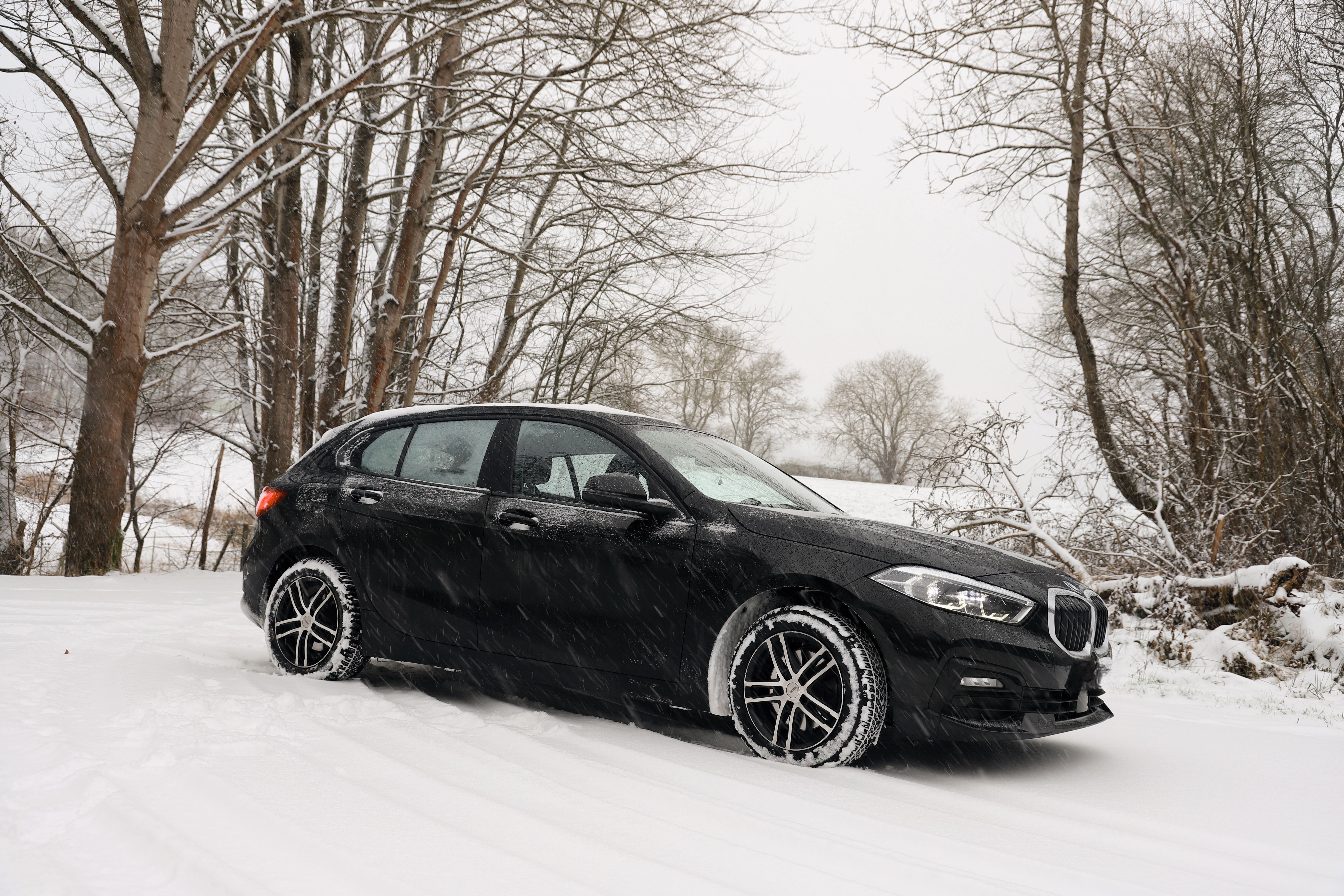

Photo by Christina & Peter on Pexels.
Canada · Winter driving 2026–27 · Last verified October 1, 2026
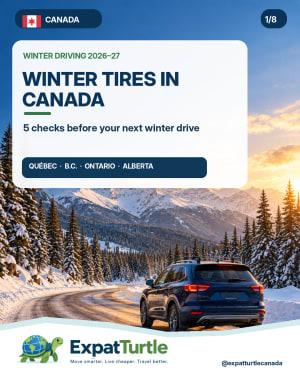
Canada does not have one national winter-tire law for passenger vehicles. Québec has a province-wide seasonal requirement for covered Québec-registered vehicles, British Columbia requires winter tires or chains on most designated routes, while Ontario and Alberta rely mainly on recommendations rather than a universal seasonal passenger-car mandate.
Winter tire rules at a glance
| Province | 2026–27 rule |
|---|---|
| Québec | Mandatory Dec 1–Mar 15 for covered Québec-registered motor vehicles |
| British Columbia | Winter tires or chains required on most designated routes Oct 1–Apr 30; some routes end Mar 31 |
| Ontario | No universal seasonal passenger-car mandate; province strongly recommends four winter/all-weather tires |
| Alberta | No province-wide passenger-car winter-tire mandate; winter/all-weather tires are recommended |
Québec: mandatory from December 1 to March 15
Québec requires covered motor vehicles registered in Québec to be fitted with compliant winter tires from December 1 through March 15. The province currently lists a fine of C$200–C$300 for failing to comply.
Québec also lists exemptions, including vehicles registered outside Québec. That does not make summer tires a sensible choice for winter conditions; it only means the provincial registration-based legal requirement is not identical for every vehicle entering Québec.
British Columbia: designated highways matter
B.C. requires winter tires or chains on most designated routes from October 1 to April 30. On some routes without high mountain passes or heavy snowfall, the requirement ends on March 31.
For passenger vehicles, B.C. recognises tires marked M+S or the three-peaked-mountain/snowflake symbol as winter tires for the legal route requirement, with a minimum tread depth of 3.5 mm. The province notes that mountain/snowflake tires provide better performance in severe winter conditions than M+S tires alone.
Ontario: recommended, not universally mandated
Ontario does not impose one province-wide seasonal winter-tire mandate on ordinary passenger vehicles. The Ontario government nevertheless recommends installing four winter or all-weather tires for cold-weather driving because they improve traction in snow, slush and cold conditions.
Ontario also requires auto insurers to offer a winter-tire discount, but the size and eligibility details depend on the insurer and policy.
Alberta: no province-wide mandate
Alberta has not introduced a province-wide seasonal winter-tire mandate for ordinary passenger vehicles. Provincial winter-driving guidance recommends winter or all-weather tires and stresses adapting speed and following distance to conditions.
M+S vs mountain/snowflake: what is the difference?
M+S means mud and snow and is a marking used on many all-season tires. The three-peaked mountain and snowflake symbol indicates the tire has met a standardized snow-traction performance test. Legal acceptance varies by jurisdiction, so do not assume a tire that is legal on one route is the best-performing choice for another winter environment.
What newcomers should check before buying tires
- Where is your vehicle registered?
- Which provinces and mountain routes will you drive through?
- Does the tire carry the marking required for that jurisdiction?
- What is the remaining tread depth?
- Does your insurer offer a winter-tire discount?
- Are you planning trips through B.C. designated routes or Québec during the mandatory period?
- Will you need chains for specific B.C. routes or vehicle classes?
For licensing rules, see our B.C. licence guide, Alberta licence guide and Ontario foreign-licence guide.
Official sources checked
- Québec — Winter tires
- British Columbia — Winter tire and chain-up routes
- Ontario — Winter driving
- Alberta — Safer winter highways
Verification date: October 1, 2026. Canada’s rules are provincial and route-specific; check the province/route again before winter travel.
← Canada hub · More travel guides · How we research