Photo by Andrea Piacquadio on Pexels.
Ontario · Minimum wage 2026–27 · Last verified October 1, 2026
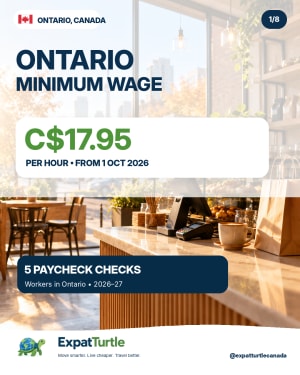
Ontario’s general minimum wage increased to C$17.95 per hour on October 1, 2026. The rate applies through September 30, 2027. A lower C$16.90 student rate applies only to qualifying students under age 18.
Ontario minimum wage rates from October 1, 2026
| Rate | Oct 1, 2026–Sep 30, 2027 |
|---|---|
| General minimum wage | C$17.95/hour |
| Student minimum wage | C$16.90/hour |
| Homeworker minimum wage | C$19.70/hour |
Who gets the C$17.95 general rate?
Ontario says the general minimum wage applies to most employees. Minimum-wage compliance is not limited to people described as “hourly workers”: how a person is paid does not automatically remove minimum-wage protection.
The Employment Standards Act has exemptions and special rules for some jobs and industries, so workers in an unusual occupation should check the Ontario employment-standards page for the rule that specifically applies to them.
Who qualifies for the C$16.90 student rate?
The student minimum wage applies to students under age 18 who work 28 hours a week or less while school is in session, or who work during a school break or summer holiday.
A worker does not qualify for the lower rate simply because they attend college or university. Age and the specific work/school conditions in Ontario’s rule matter.
What if the rate changed in the middle of a pay period?
Ontario law provides for the minimum-wage calculation to be split when a rate changes during a pay period: hours before the effective date are assessed under the old rate and hours on/after the change under the new rate.
Salaried and commission workers
Being paid a salary or commission does not by itself mean minimum wage is irrelevant. Ontario assesses minimum-wage compliance over the applicable pay period, subject to exemptions and special industry rules.
Keep your own record of hours if your schedule varies significantly or if you are paid partly by commission, piece rate or another non-hourly method.
What newcomers should check on a pay statement
- Your hourly rate or the salary/pay-period amount.
- The hours used to calculate the pay where applicable.
- Overtime or public-holiday amounts where applicable.
- Deductions and whether you understand what each one is.
- Whether the correct minimum-wage rate was used for hours worked from October 1, 2026 onward.
What if you think you are being underpaid?
Start by comparing your pay records with Ontario’s current Employment Standards Act guidance and checking whether a special rule or exemption applies to your job. Keep schedules, pay statements and written employment terms.
Ontario’s Ministry of Labour provides information and an employment-standards claim process for eligible disputes. Do not rely only on a verbal explanation from a manager if the numbers on your pay do not add up.
New to the country? Our first 30 days in Canada checklist and newcomer banking guide cover common setup steps.
Official source checked
Verification date: October 1, 2026. These are Ontario employment-standards rates. Federally regulated workplaces and other provinces use different rules.
← Canada hub · More work/living guides · How we research